Tag: Simcoe County Landscaping

Why Your Outdoor Lighting Isn’t Working (And What to Do About It)

Transform your property from lighting disaster to neighbourhood showstopper with strategic fixes that actually work

Walk through any Ontario neighbourhood after dark and you’ll see the same lighting mistakes repeated on nearly every property. Harsh security floods that blind you at the front door. Solar lights that died sometime last summer. That random spotlight pointing at absolutely nothing. If your outdoor lighting feels more like a problem than a solution, you’re not alone—and you’re definitely not stuck with it.

Here’s the reality: most outdoor lighting fails because it’s treated as an afterthought rather than a strategic design element. The difference between lighting that works and lighting that transforms your property comes down to understanding a few key principles that most homeowners (and unfortunately, many contractors) completely miss.

The Most Common Lighting Mistakes That Kill Curb Appeal

Before we dive into solutions, let’s identify the usual suspects that are sabotaging your outdoor lighting efforts. Recognizing these mistakes is the first step toward creating lighting that actually enhances your property.

1. Airport Runway Syndrome

The problem: A straight line of identical fixtures marching down your driveway or walkway like landing lights. This creates a harsh, commercial look that screams “gas station” rather than “welcoming home.”

Why it happens: It’s the easiest installation method, and many contractors default to the most straightforward approach without considering visual impact.

The fix: Vary fixture heights, styles, and spacing. Layer different types of lighting—path lights, accent lights, and subtle landscape illumination—to create depth and visual interest.

2. The Great Solar Light Graveyard

The problem: Those once-bright solar stake lights from the hardware store that are now dim, crooked, or completely dead. Solar lighting seems like a great idea until Ontario’s long winters and short daylight hours expose their limitations.

Why it fails: Cheap solar lights rarely survive Canadian weather conditions. Snow, ice, and limited winter sunlight make them unreliable when you need them most.

The solution: Invest in low-voltage LED systems with proper weatherproofing. While the upfront cost is higher, the reliability and performance make them worth every penny.

3. Security Flood Overkill

The problem: Motion-activated security floods that turn your front yard into a detention centre every time a raccoon walks by. These lights prioritize function over form and often create more problems than they solve.

The issue: Harsh, bright lights create dramatic shadows and make your property feel unwelcoming. They also waste energy and can annoy neighbours.

The better approach: Layer security lighting with ambient options. Use downlights or wall sconces that provide adequate illumination without the harsh glare, and save motion sensors for areas that actually need them.

4. Leftover Christmas Light Syndrome

The problem: Year-round holiday lights, mismatched fixture styles, or random spotlights that serve no clear purpose. This creates visual chaos that detracts from your home’s architecture.

Why it persists: Lighting often gets added piecemeal over time without an overall plan, resulting in a hodgepodge of styles and functions that don’t work together.

The fix: Develop a cohesive lighting plan that serves your property’s specific needs and architectural style.

The Professional Difference: Layered Lighting That Actually Works

The secret to outdoor lighting that enhances rather than detracts from your property is understanding how different types of lighting work together. Professional landscape lighting design uses multiple layers to create ambiance, highlight features, and provide necessary illumination without overwhelming the space.

Layer 1: Ambient Lighting

Purpose: General illumination that creates a welcoming atmosphere and allows safe navigation.

Best applications: Soft downlights in trees, subtle wall sconces, or well-placed path lighting that provides enough light without being intrusive.

Ontario considerations: Choose fixtures rated for extreme weather conditions and use LED technology for energy efficiency during long winter nights.

Layer 2: Task Lighting

Purpose: Focused illumination for specific activities like cooking on the patio, reading house numbers, or navigating steps.

Smart placement: Under-cabinet lighting for outdoor kitchens, discreet step lights for stairs, and appropriately sized fixtures for entryways.

Professional insight: Task lighting should be bright enough to be functional but shouldn’t dominate the overall lighting scheme.

Layer 3: Accent Lighting

Purpose: Dramatic highlights that showcase your property’s best features—mature trees, architectural details, or water features.

Techniques: Uplighting for trees, grazing lights for textured walls, or spotlights for focal points like sculptures or specimen plants.

The payoff: This is where professional design really shines. Properly placed accent lighting creates depth and visual interest that makes your property stand out.

LED Upgrades: The Game-Changer for Ontario Properties

If you’re still using halogen or incandescent outdoor lighting, you’re missing out on significant improvements in performance, efficiency, and longevity. LED technology has revolutionized outdoor lighting, especially in challenging climates like Ontario’s.

Performance advantages:

  • Instant-on capability even in cold weather
  • Consistent light output throughout the fixture’s lifespan
  • Better colour rendering that makes landscapes look more vibrant
  • Dimming capability for adjustable ambiance

Economic benefits:

  • Up to 80% reduction in energy consumption
  • Fixture lifespans of 25,000+ hours (compared to 1,000 hours for halogen)
  • Reduced maintenance costs and replacement frequency
  • Lower heat output reduces fire risk and energy waste

Environmental considerations:

  • Reduced carbon footprint from lower energy consumption
  • No mercury or other toxic materials
  • Recyclable components at end of life

Common DIY Fixes vs. Professional Solutions

Some lighting issues can be addressed with simple adjustments, while others require professional expertise to resolve properly. Understanding the difference can save you time, money, and frustration.

DIY-Friendly Fixes:

  • Cleaning dirty fixtures and replacing burned-out bulbs
  • Adjusting fixture angles for better light distribution
  • Trimming vegetation that’s blocking light paths
  • Replacing obviously damaged solar lights with quality alternatives

Professional Solutions Needed:

  • Electrical work and new circuit installation
  • Transformer sizing and low-voltage system design
  • Fixture selection and placement for optimal coverage
  • Integration with smart home systems and timers

The ROI of Professional Outdoor Lighting

Professional landscape lighting isn’t just about immediate curb appeal—it’s an investment that pays dividends in multiple ways. Homeowners typically recoup 60-70% of their lighting investment when they sell, making it one of the highest-ROI outdoor improvements available.

Immediate benefits:

  • Enhanced safety and security around your property
  • Extended outdoor living season and usability
  • Increased property value and marketability
  • Reduced insurance risks from improved visibility

Long-term value:

  • Professional-grade fixtures last decades with minimal maintenance
  • Energy-efficient LED systems reduce operating costs
  • Proper design prevents costly mistakes and re-work
  • Scalable systems can be expanded as your needs change

Getting Your Lighting Strategy Right

The key to outdoor lighting success is starting with a comprehensive plan that considers your property’s unique characteristics, your lifestyle needs, and your budget constraints. Professional lighting designers understand how to balance aesthetics with functionality while working within Ontario’s specific climate and regulatory requirements.

Essential planning elements:

  • Site analysis to identify opportunities and challenges
  • Electrical load calculations and transformer sizing
  • Fixture selection based on architectural style and performance needs
  • Installation scheduling to minimize landscape disruption
  • Maintenance planning for long-term performance

Don’t let another season go by with lighting that doesn’t work for your property. The right lighting strategy can transform your outdoor space from a problem area into your favourite part of your home.


Ready to fix your outdoor lighting once and for all? Black Swan Landscaping specializes in comprehensive lighting solutions for properties throughout Simcoe County and the GTA. Contact us for a professional assessment that will transform your property’s evening appeal while maximizing your investment.

Side-by-side comparison of black mulch and red mulch in garden beds showing contrast with green plants

Black Mulch vs. Red Mulch: Why Colour Matters for Your Garden

When it comes to mulching your garden beds, the colour you choose affects more than just aesthetics. While the vibrant hue of red mulch might catch your eye at the garden centre, there are compelling reasons why black (or brown) mulch has become the preferred choice for professional landscapers and discerning homeowners alike.

The Science Behind Mulch Colours

Mulch colour results from different dyeing processes, but these colours impact how the mulch performs in your garden. Here’s what you should know about the most popular options:

Black Mulch: The Professional’s Choice

Black mulch typically gets its colour from carbon-based dyes or from the natural aging process of certain organic materials. This darker colouration offers several significant advantages:

  • Superior Solar Absorption: Dark mulch absorbs more sunlight, warming soil faster in spring and maintaining more consistent soil temperatures.
  • Enhanced Contrast: Dark mulch creates a striking background that makes plants—especially flowering varieties—visually “pop” in your landscape.
  • Natural Appearance: As it ages, black mulch maintains a look that resembles natural forest soil, blending harmoniously with the landscape.
  • Slower Fading: The darker pigments in black mulch typically last longer before fading, maintaining your garden’s polished appearance throughout the season.

Red Mulch: Attractive But Problematic

Red mulch derives its colour from iron oxide (rust) or from chemical dyes applied to wood chips. While it creates a vibrant contrast in certain landscape designs, it comes with several drawbacks:

  • Unnatural Appearance: The bright red colour can appear artificial and out of place in many landscape settings.
  • Faster Colour Fading: Red mulch typically fades more quickly than darker varieties, often turning an unattractive grayish-pink within a single season.
  • Potential Contaminants: Some lower-quality red mulches may contain chemical dyes that can leach into soil.
  • Pest Attraction: Surprisingly, the red colouration may actually attract certain insect species, particularly some types of beetles.

The Bug Factor: Why Darker Mulch Means Fewer Pests

One of the most compelling reasons to choose darker mulch is its natural pest-deterrent properties. Research and professional experience have shown that:

  • Many insects are naturally attracted to red and other bright colours as they resemble flowers
  • The dark colouration of black mulch provides less visual contrast for many flying insects, making your plants less of a target
  • Some insects that damage landscape plants, particularly certain beetles, show a marked preference for areas with red mulch
  • The higher soil temperatures beneath black mulch can discourage certain soil-dwelling pests from establishing colonies

At Black Swan Landscaping, we’ve observed this difference firsthand across hundreds of properties—gardens with dark mulch consistently show fewer pest problems compared to those with red mulch installations.

Moisture Retention and Weed Suppression

Beyond aesthetics and pest resistance, the primary functions of any mulch are moisture retention and weed suppression. Here again, black mulch demonstrates clear advantages:

Superior Moisture Management

The dark colour of black mulch impacts how water moves through your garden beds:

  • Black mulch absorbs more heat, creating temperature differences that can reduce evaporation from the soil surface
  • The manufacturing process for premium black mulch often results in a product that decomposes at an ideal rate, creating optimal soil structure for water retention
  • The density of quality black mulch provides more consistent ground coverage, preventing moisture loss through gaps

In our Ontario climate, where summer can bring periods of heat and drought, this enhanced moisture retention translates to healthier plants with less supplemental watering.

More Effective Weed Control

Weed suppression is another area where mulch colour makes a surprising difference:

  • Black mulch typically blocks more light from reaching the soil, inhibiting weed germination more effectively
  • The higher soil temperatures under dark mulch can actually prevent certain weed seeds from germinating
  • Premium black mulch options often break down more slowly than their red counterparts, providing longer-lasting weed control

For most homeowners, reduced weeding is a primary motivation for mulching—making black mulch’s superior performance in this area particularly valuable.

Landscape Design Considerations

While practical benefits are important, aesthetic considerations also matter when selecting mulch. Black mulch offers several design advantages:

  • Versatile Coordination: Black complements virtually any architectural style and plant palette
  • Emphasis on Plants: The neutral background allows your plants to be the focal point
  • Perceived Space Management: Dark colours recede visually, making small spaces appear larger
  • Modern Appeal: Black mulch provides a contemporary, polished look popular in current landscape design

These design benefits explain why black mulch is overwhelmingly favoured in professionally designed landscapes and showcase properties.

Environmental Impact Considerations

Environmentally conscious homeowners should also consider the sustainability aspects of mulch choices:

  • Many premium black mulches are produced from recycled wood products, giving new life to waste materials
  • Natural black mulches (those darkened through aging processes rather than dyes) offer the most environmentally friendly option
  • The longer-lasting nature of quality black mulch means less frequent replacement and therefore less resource consumption
  • Better moisture retention translates to water conservation—an increasingly important environmental consideration

At Black Swan Landscaping, we prioritize sourcing our dark mulch from sustainable producers like Mother Nature, who utilize responsible manufacturing practices.

Application Recommendations for Maximum Benefit

To maximize the benefits of darker mulch in your landscape:

  1. Apply appropriate depth: 2-3 inches for established beds; never exceed 4 inches or pile mulch against tree trunks
  2. Refresh strategically: Add a thin top layer annually rather than completely replacing mulch
  3. Edge precisely: Create clean, defined edges between mulched areas and lawns or hardscapes
  4. Water thoroughly before application to ensure soil is moistened before mulch is applied
  5. Consider pre-emergent weed control beneath the mulch for maximum weed prevention

Our professional installation teams follow these best practices to ensure your mulched areas perform beautifully while providing maximum plant benefits.

Cost Considerations: Value Beyond Price

While premium black mulch may sometimes cost slightly more than red varieties, the long-term value proposition strongly favours black mulch:

  • Reduced replacement frequency due to slower fading and decomposition
  • Lower irrigation costs through better moisture retention
  • Reduced pest control expenses
  • Less time spent on weed management
  • Enhanced property value through superior aesthetic appeal

When calculating the true cost of your mulch choice, these factors often make darker mulch the more economical option despite any initial price difference.

Make the Switch to Dark Mulch This Season

If your landscape still features red mulch, May is the perfect time to make the upgrade to black. Our professional installation ensures proper preparation, precise application, and pristine edging for a landscape that looks as if it belongs in a home and garden magazine.

Contact Black Swan Landscaping today to schedule your mulch installation. Our spring calendar is filling quickly—secure your spot now for a landscape that’s both beautiful and lower-maintenance throughout the summer months ahead.

Spring Sprinkler Started up to water the garden

Your Essential Spring Maintenance Checklist: Small Steps Now, Big Savings Later

As the snow melts and temperatures rise, your property is revealing the toll winter has taken. At Black Swan Landscaping, we know that addressing maintenance tasks early not only enhances your property’s appearance but also prevents costly repairs down the road. Use this comprehensive checklist to ensure your outdoor spaces thrive all season long.

Lawn Care Essentials

  • Remove winter debris – Clear away fallen branches, leaves, and other debris that accumulated over winter
  • Rake and dethatch – Remove dead grass to allow new growth to flourish
  • Aerate compacted soil – Improve nutrient absorption and root development
  • Apply spring fertilizer – Give your lawn the nutrients it needs for strong early growth
  • Overseed bare patches – Address thin areas before summer heat makes establishment difficult
  • Hand-pull early weeds – Target them before they establish strong root systems
  • Set up proper watering schedule – Ensure your lawn receives 1-1.5 inches of water weekly

Pro Tip: Consider installing an irrigation system to save up to 37 hours of your summer spent manually watering. Our calculations show this investment typically pays for itself within 1-2 years!

Garden Bed Maintenance

  • Edge all garden beds – Create clean, defined borders between lawn and planting areas
  • Remove weeds and dead plants- Start with a clean slate for new growth
  • Prune damaged branches – Cut back winter damage on shrubs and ornamentals
  • Apply fresh mulch :
  • We recommend black or brown mulch, which:
  •   Suppresses weed growth naturally (reducing need for chemicals)
  •   Retains soil moisture better than red varieties
  •   Deters certain pests (unlike red mulch which can attract insects)
  •   Provides elegant contrast with your plants
  • -Divide overgrown perennials- Rejuvenate crowded plants and expand your garden

Hardscape Inspection and Repair

  • Clean moss from interlocks – Prevent spread and slippery surfaces
  • Check for uneven or shifting stones – Address frost heave issues promptly
  • Replenish polymeric sand between pavers 
  • This simple step:
  •  Prevents weed growth
  • Deters insect
  • Stabilizes your interlock structure
  • Makes your hardscape look freshly installed
  • Inspect retaining walls – Look for bulging or leaning sections
  • Clean and seal natural stone surfaces – Protect porous materials from staining


Exterior Structure Maintenance

  • Power wash decks, fences, and siding – Remove winter grime and mildew
  • Inspect and clean gutters – Ensure proper drainage away from foundations
  • Apply fresh stain or sealant – Protect wooden structures from moisture damage
  • Repair damaged caulking – Seal gaps around windows and exterior fixtures
  • Clean windows inside and out – Maximize natural light in your home

Outdoor Lighting Review

  • Check all fixtures for damage – Replace broken lights or covers
  • Clean light fixtures – Remove dirt that reduces illumination
  • Adjust timers for longer daylight hours – Maximize energy efficiency
  • Consider adding landscape lighting – Enhance safety and extend outdoor enjoyment into evening hours

Drainage Assessment

  • Inspect downspouts – Ensure they direct water away from foundations
  • Check for pooling water – Address low spots in the yard
  • Clean drainage grates – Remove debris from driveway and yard drains
  • Consider rainwater collection systems – Reduce water bills while being eco-friendly

Why Maintenance Matters: The Cost of Procrastination

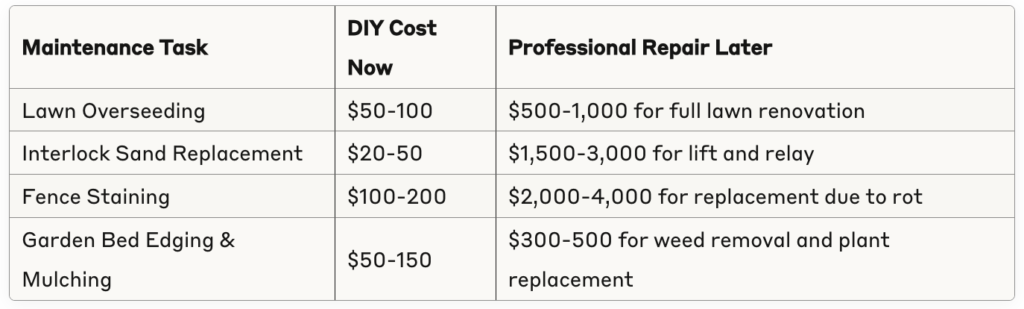
Delaying these essential maintenance tasks doesn’t just affect your property’s appearance—it can significantly impact your wallet: (pricing for a standard home up to a 50’ wide lot)

Let Black Swan Landscaping Handle Your Spring Maintenance

Feeling overwhelmed with all the items you need to check off your list? Contact us today to schedule your spring maintenance service and protect your outdoor investment.

__________________________________________________________________________________

Black Swan Landscaping serves the Greater Toronto Area, Simcoe County, and Muskoka regions with professional landscaping services that make the impossible possible.